Standing Word Work
Quick Tip: To combat the fidgets in your most active students, get them up and moving during word work, if your classroom space allows for it. I have sets of magnetic letters on cookie trays for those who would rather sit at the table or on the carpet, but also offer an area for students to stand while working. When students are given choice, it works like a charm.
Enjoy!
Labels:
Engagement Strategies,
Word Study,
Word Work
Using Today's Meet, Padlet Walls and QR Codes for Reading Engagement
This post is dedicated to one of my very talented and dedicated teacher friends, Kelly, who is also a motivating workout partner, as well as a few of my awesomely accomplished #PLN pals on Instagram: Sarah from Snippets by Sarah, Lori from Conversations in Literacy and Christiana from Lasting Literacy. They inquired about the use of the QR code in the picture above, and instead of explaining it on Instagram, I decided I'd write a little "tech post", since it's been a while.
In this post, I will share some information to help you create a TodaysMeet chat room, in addition to a Padlet wall. Both of these platforms are wonderful backchannels to hold students accountable and to capture their thinking! I will then go on to explain how students can access these online platforms without an account, login or password. In this case, I truly believe these online platforms are quite easier used than explained, but let's see how I do. ;)
To keep my students interested, engaged and accountable when responding to reading inside or outside of my RtI intervention room, I have them use a combination of tools: QR code scanner apps, such as QR Reader and Scanner or i-nigma Barcode Reader, QR codes from qrstuff.com, TodaysMeet and Padlet, all which are FREE. That's the best part, for sure.
I am blessed to work in a school district implementing 1:1 iPad technology. All students have access to their own iPad, and since my intervention time is so brief with the students, these tools can be used from their classroom, home, or even the library, as long as they have their book, a QR code and an iPad or other device loaded with a scanner app.
Let's get underway. Since YouTube is my go-to resource for all how-to tutorials, I used this link HERE to learn how to set up my chat room, so please take a moment to do the same before continuing. Multiple temporary chat rooms can be created and sorted, depending on your needs. Your chat rooms have an expiration date extending anywhere from one hour to one year.
Once my students are in the chat room, I have them enter their initials in the Nickname area, hit Join, type their responses to my posed question(s) into the blue box and then hit Say. When the students strike the Say button, others in the group can view their peers' responses, similar to a working document in Google.
Student comments and responses can only be 140 characters, just like Twitter, however, they can respond multiple times. This allows students to extend on their thoughts, read and respond to others' comments, as well as pose their own questions they may have. It's a great way to get kids engaged in conversations with peers about their reading. Since responses are typed, there are no interruptions from others around them. This is definitely a pro, especially in a classroom with 28+ students. Having typed responses also gives a voice to shy students who my be hesitant to amplify their voice in an oral classroom discussion. Empowering, right?
An example of a few responses from a 3rd grade group is below. Keep in mind, we are an intervention group, so student responses and ideas are always under construction, but ever evolving. ;)
Moving on to Padlet. Once again, I self-educate on YouTube, so click HERE for the teacher tutorial video that helped me create my own walls. Padlet is just as simple to set up as TodaysMeet and permits you to create unlimited walls, just as TodaysMeet enables you to create as many chat rooms as you wish. You have the ability to customize each wall with different backgrounds, in addition to wall names and descriptions.
Once you create a wall, students access it with a link you provide them. (The video tutorial explained one way to share the link, but at the end of this post, I will show you another way. Hang tight!) Students double click in an open area on the wall. The box below is what the students view once they have double clicked. The icons in the box allow students to add text, record their voices (videos), add hyperlinks, photos and documents. Amazing customizable uses, especially for a free platform.
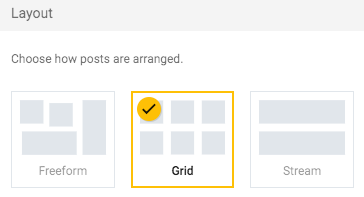
You can organize the students' response posts in 3 ways: Freeform, Stream and Grid. I usually choose Grid as shown in the picture below, so the most recent posts appear first. Both TodaysMeet and Padlet allow teachers to view the students responses while they're working, so you can keep track of their participation, or lack of participation in some cases.
If you prefer to keep your wall private from the public, there are options to do so. I prefer to keep my rooms Secret.
I recommend you playing around with Padlet a bit to get the hang of how to use it. There are plenty of links out there on the web to support you, but there's Padlet at a glance. If you would like to see a previous post I've written on using Padlet in the classroom alongside a makeshift *recording booth*, click HERE.
Lastly, you may be asking yourself, how do my students access the TodaysMeet chat rooms or Padlet walls I create? Well, all you have to do go to qrstuff.com, copy and paste each URL from the chat rooms and Padlet walls you have created into where it says Website URL (see the blue arrow). Choose the color for your QR code, then download the customizable code that appears.
I love how the codes can be created in different colors. My students have associated my blue codes, for example, with TodaysMeet and my black codes with Padlet, even though I print them out with headings. For example, the blue code has Team Noffsinger's TodaysMeet Access Code typed above it.
As a last step, I print out the codes, sticky tack them to my classroom walls in different areas, as well as send them home in the students' Take-Home book bags. They use their iPad or other device to pull up a scanner app, such as QR Reader and Scanner or i-Nigma Barcode Reader, to scan the code to access the chat room or wall.
I hope this post was helpful to someone out there and that I haven't confused you. Please be willing to explore a bit. I think you'll be happily surprised.
Have a great weekend!
UPDATE: #Yay :)
Hacking Homework (Part 2): Favorite Quotes, Tips, Advice from Hacks 5-10 & the Conclusion
I'm back to share more from Connie Hamilton's and Starr Sackstein's amazing book, Hacking Homework: 10 Strategies That Inspire Learning Outside of the Classroom. This post is dedicated to Hacks 5-10, as well as the Conclusion. If you missed my previous post from the first part of the book and are interested in reading it, please click HERE. Before I begin, below are a few tweets and articles from the authors regarding homework.
![]() |
| LOVE THIS! #LOL |
![]() |
| Click the image to read the article! |
- Play, though extremely valuable for a student's learning progression, isn't considered "real work" that can substitute for content that needs to be covered (p.86).
- Play can encompass a range of activities; not just games or outdoor sports, but all structured and unstructured activities that students choose to do on their own time, such as reading, music, or painting (p.86).
- The more we offer students opportunities to do the things they love outside of school, while connecting those activities to what was learned, the more they will approach learning from a fresh and engaged perspective during the day (p.87).
- Throw out worksheets (p.87). (This one is my all-time favorite!!)
- ...ask students to tinker with writing, an art project, or a science lab for one period and then ask them to reflect on what skills were being used (p.88).
- ... there are many standards that can be taught through different forms of play (p.91).
- Because school has gotten much more serious even for younger students, play is essential to helping connect learning to life in a meaningful and enjoyable way. These connections are what will make lifelong learners out of our kids (p.93).
- Homework doesn't have to be onerous; it can be enjoyable and should be (p.99).
Hack 6: Spark Curiosity Before the Lesson- Make Connections That Generate Interest in Learning
- Some teachers use homework exclusively as a means of practicing skills taught in class, overlooking potential opportunities to spark excitement about learning (p.101).
- Start to drop hints about future lessons, with the goal of getting students to explore upcoming material outside of class (p.103).
- Triggering curiosity can be as simple as creating a series of agree/disagree statements that ask students to make judgement calls connecting prior knowledge with upcoming information (p.104).
- When we allow students to approach a topic before we do so in class, they grow curious, follow their own lines of inquiry, and practice independence skills (p.106).
- ...practice shouldn't always mimic what has been done in class. We want to push students to apply ideas, skills, and concepts to new learning, developing the depth of their content understanding as well as their analytical abilities (p.106).
- Creating interest should be a primary goal of teaching. Our job as educators is to make learning fun so that students become adults who are lifelong learners; curiosity plays a huge role in this (p.106-107).
Hack 7: Use the Digital Playground- Harness Social Media for Learning
- We have to stop avoiding the digital shift and start embracing technology, as it is vital to how today's students learn in school, but even more so at home (p.111-112).
- Rather than force students to approach education the way adults always have, schools must meet them where they are, integrating technology and social media into learning both in and outside of the classroom to further digital skills that will be carried with them in the future once they are done with school (p.112).
- Students need to learn early about the magnitude of their digital choices (p.113).
- The more we fill their [students] toolboxes, the more resources they have to explore their interests and extend lessons beyond the classroom (p.114).
- For younger students, closed platforms like Edmodo, Meetup, or Kidblog help students practice good digital citizenship in class. For older students, use Twitter or Google Communities as a way to backchannel discussions both in and out of class (p.117).
- Social media, however, has the power to make the world a much smaller, more connected place. This is a medium with which students are already engaging, and often not for the best purposes, so teach them to use it effectively (p.120).
- We would never take kids to an unsupervised location and leave them alone, with no instruction, so why should that happen with social media (p.120)?
- Social media helps to marry the technology with the face-to-face experiences we encounter and helps develop interpersonal skills and literacy skills at the same time (p.126).
Hack 8: Amplify Student Voice- Incorporate Choice in How Kids Learn at Home
- Education generally uses a top-down model, ignoring the most important voice- the student's (p.127).
- The less ownership we give students, the less they have the ability to think for themselves (p.128).
- When we don't allow students to have a say, the purpose of the home learning is often unclear (p.128).
- When given the opportunity to make choices about home learning, most students develop sound options; sometimes even better ones than teachers (p.129).
- Instead of only one assignment for home, offer a "choose your own adventure" option in which students decide how to demonstrate their knowledge but still fulfill learning objectives (p.129).
- Sometimes it's a good idea to let students follow their own paths, even if you suspect it won't work out the way they plan. Failure serves as a wonderful learning experience in itself (p.132).
- Try not to limit kids to what works for you as a teacher. Offer suggestions, but be okay if they don't take them (p.132).
- Any time we highlight or showcase brilliant student work, we show kids that their ideas matter (p.133).
- We know that when interest is high students will create their own inquiry around a topic (p.133).
Hack 9: Team Up With Families- Model Instructional Strategies for Parents
- Without proper communication and explanation, parents won't understand the approach today's teachers are taking to meet the needs of 21st century learners, both in and out of school (p.141).
- All parents want their child to succeed, but success is often based on right answers and not deep understanding of concepts and skills (p.142).
- Changing parents' conceptions of learning is an important step toward teaming with them so students extend learning opportunities everywhere (p.143).
- Instead of predicting what you think your parents want or need, create a survey and solicit their feedback (p.145).
- Provide experiences for parents that will give them both a frame of reference for how they might support students at home and a better understanding of how learning occurs in your classroom (p.146-147).
- Provide strategies to parents (p.147).
- When you solicit parent feedback, you should share a summary of that feedback with the entire parent community, along with your plan for how you will use feedback to influence your future decisions (p.150).
- If we provide parents with tools for facilitating student success, honoring their key roles as co-educators in their children's lives, we--the teachers and the parents--convey a consistent and powerful message to students (p.156).
- Explicit examples, experiences, and concrete tools are all ways to help parents broaden their perspectives on how their kids learn (p.156).
*** Side Note: If you want more information on how to team up with families in their child's education, check out my post from Hacking the Common Core, dedicated to Hack 10: Involve Parents- Clarify Their Role.
Hack 10: Display Growth- Empower Students to Track Their Improvement and Display Progress
- Along with mandatory nightly homework assignments, many schools require that homework be graded, assuming that grades are what motivate students to do the work and that grades communicate what students learned (p.157).
- Students often receive little to no feedback for their homework, as there is just too much of it for teachers to make meaningful comments (p.158).
- As we stop forcing kids to comply with policies that don't facilitate learning and start making out of class work meaningful, we need to help students develop an understanding of who they are as learners, so they are able to express what they know and can do (p.159).
- Stop collecting and grading every assignment (p.159).
- Enrich student growth with only purposeful assignments (p.159).
- In using reflection as a tool in class, students learn to evaluate their tracked progress, discuss their goals and describe how they were able to meet or exceed standards, with specific reference to the strategies employed (p.162).
- Students need to receive targeted, personalized feedback that lets them know they are moving in the right direction and identifies areas in which they must continue to grow (p.163).
- Progress isn't about short-term points and compliance; it's about mastery and achievement over time (p.164).
- Feedback coupled with teacher- and peer- provided strategies and reflection facilitates student ownership (p.169).
- As we continue to reimagine what homework can be, we need to remember what the point of education is: to help students become more independent and engaged in their own learning by shifting toward a more student-centered experience (p.170).
Conclusion: It's Time to Rethink How Learning Happens Outside of School
- Mistakes happen (p.172).
- Filling students' time with oodles of work beyond the school day sends a negative message about how we value what students do outside of school (p.172).
After reading the quotes, tweets and articles above, do you believe it's time to start #HackingHomework? As I mentioned in my previous post, anyone who assigns students homework must read this book. It certainly provides valuable insight on what truly matters when trying to extend students' learning outside of the classroom. Ponder the tweet below. I certainly think it's time for a change. ;)
Happy Hacking!
Labels:
Hack Learning,
Hacking Homework,
Homework,
Parent Tips,
Technology
Hacking Homework: Favorite Quotes, Tips, Advice from the Introduction & Hacks 1-4
Are you familiar with the Hack Learning Series of professional development books? Back in March of last year, I participated in the #D100bloggerPD Crew's book study dedicated to Mark Barnes' and Jennifer Gonzalez's book Hacking Education and then, more recently, another book study dedicated to Michael Fisher's Hacking the Common Core. Both books were amazingly helpful in navigating what teachers are faced with in the classroom.
Currently, I am part a Voxer group created by my colleague Leah O'Donnell from Responsive Literacy. She and I are co-leading the discussion on Connie Hamilton's and Starr Sackstein's book, Hacking Homework: 10 Strategies That Inspire Learning Outside the Classroom. Anyone who assigns students homework must read this book. It certainly provides other perspectives and valuable insight on homework and what truly matters when trying to extend students' learning outside of the classroom. If you're interested in joining the Voxer group, click HERE to request access from Leah. :)
Below are a few of my favorite quotes, tips and/or advice found on Twitter, within the Voxer group, as well as throughout the first half of Hacking Homework.
I'll be honest. When I was a classroom teacher just over 8 years ago, I was guilty of assigning homework just because it was part of the supplemental material packs in the basal and math programs at the time. The work sent home wasn't always meaningful and it certainly wasn't differentiated. That was the norm back then for many educators. The assigned homework was pretty much geared toward those students who were considered on grade level. A lot has changed over the years, especially in terms of differentiation, peer collaboration, flexible seating, technology use in the classroom, and now homework as well.
Nowadays, as a Reading Specialist, mother and educator who has grown a tremendous amount professionally over the past 21 years of my career, I can genuinely say I now know better. Since I know better, I do better. My journey in becoming a more impactful teacher will never cease because I have a passion and inner-drive to use research-based best practices. I'm hoping this post will guide you in reconsidering what is best practice for homework assignments.
Introduction: It's Time to Reimagine Homework
Are you on Twitter? If so, join the #D100chat on Hacking Homework coming up next week. It's a chance to change your views on homework. Co-authors Connie Hamilton and Starr Sackstein will be joining us, too! Make sure to also check out the hashtags #HackingHomework and #HackLearning on Twitter for little tidbits of useful tips that can alter the way you view happenings in Education.
Happy Wednesday!
Colleen
@Litlovegal1
Currently, I am part a Voxer group created by my colleague Leah O'Donnell from Responsive Literacy. She and I are co-leading the discussion on Connie Hamilton's and Starr Sackstein's book, Hacking Homework: 10 Strategies That Inspire Learning Outside the Classroom. Anyone who assigns students homework must read this book. It certainly provides other perspectives and valuable insight on homework and what truly matters when trying to extend students' learning outside of the classroom. If you're interested in joining the Voxer group, click HERE to request access from Leah. :)
Below are a few of my favorite quotes, tips and/or advice found on Twitter, within the Voxer group, as well as throughout the first half of Hacking Homework.
I'll be honest. When I was a classroom teacher just over 8 years ago, I was guilty of assigning homework just because it was part of the supplemental material packs in the basal and math programs at the time. The work sent home wasn't always meaningful and it certainly wasn't differentiated. That was the norm back then for many educators. The assigned homework was pretty much geared toward those students who were considered on grade level. A lot has changed over the years, especially in terms of differentiation, peer collaboration, flexible seating, technology use in the classroom, and now homework as well.
Nowadays, as a Reading Specialist, mother and educator who has grown a tremendous amount professionally over the past 21 years of my career, I can genuinely say I now know better. Since I know better, I do better. My journey in becoming a more impactful teacher will never cease because I have a passion and inner-drive to use research-based best practices. I'm hoping this post will guide you in reconsidering what is best practice for homework assignments.
Introduction: It's Time to Reimagine Homework
- If homework is assigned, it must be purposeful, transparent, and tied to learning experiences (p.17).
- Homework is one of the most misused tools in education (p.19).
- After being in school for seven hours, shouldn't a child have the opportunity to reflect in a manner that is meaningful to him or her, allowing new learning to sink in before adding more practice (p.19)?
- Traditional homework is an insidious practice that often ruins the learning process for children and puts a damper on playtime and learning as a positive experience (p.20).
Hack 1: Break Up With Daily Homework- Work Around the Policies
- We strive to shift the perspective on learning at home to be more exciting and relevant than what we experienced as students (p.20).
- We send mixed messages to families when we promote family time, extracurricular activities, and student jobs, then infringe upon that time with nightly required homework (p.24).
- Expecting children to continue their "work" after long school days, {which} doesn't support what we know about child development (p.25).
- Distinguish between "required homework" and recommendations to support learning (p.26).
- Being explicit about your intentions and rationale helps parents and students understand the reasons for deviating from the status quo (p.28).
- We can shift parents' perspectives by explaining the purpose and expectations of the new policy, arming them with clear strategies to support learning both when assignments are and are not provided (p.30).
- Investment is the most important thing parents can give their children. For a kid, spending time enjoying his or her family's company is more beneficial to the home environment than being stuck at the kitchen table completing required assignments (p.32).
Hack 2: Teach Organization and Responsibility in Class- Ramp Up Accountability and Time Management Skills
- Expanding the definition of nightly homework allows us to celebrate the learning that occurs in a diversity of formats (p.33).
- Of course we want students to be able to manage their time, meet deadlines, do quality work, and take ownership of their learning, but simply doling out assignments doesn't achieve these goals (p.37).
- In order to effectively tackle poor habits, we should provide direct instruction and models of best behavior, teaching students how to keep track of deadlines and class materials; how to manage time efficiently; and how to be accountable for their work (p.39).
- ...let's look for opportunities to introduce and strengthen organizational and accountability skills, expanding beyond the traditional approach of assigning homework (p.40).
- If you find yourself saying, "I shouldn't have to teach my students to _____; they should know how to do it by now," that's a good indicator that you do have to teach or re-teach expected behaviors (p.45).
Hack 3: Cultivate Rapport- Establish Positive Relationships to Motivate Learning
- ...organization is a precursor to the ability to hold oneself accountable and act responsibly (p.54).
- When learning is viewed as "work" and students are expected to do it to avoid negative consequences, the message about learning becomes twisted (p.56).
- Teachers who connect with students are more likely to get quality work from them. Authentic conversations about progress and growth occur when there is a trusting relationship (p.56).
- Stop praising students for their intelligence. Compliments like "You're a genius" suggest students either have the ability or they don't. These comments do not promote hard work or desire to become intentionally thoughtful about learning (p.58).
- Fair doesn't mean equal (p.61).
- There is a missed opportunity if we don't find some time to guarantee that all students have reflection time on their academic progress (p.61).
Hack 4: Customize to Meet Student Needs- Be Flexible With Assignments and Timelines
- It's not always an expensive speaker or new curriculum that helps students see the value in learning, including learning at home (p.69).
- Understanding the broader purpose and the transferable life skill helps students see how their work connects to short-term learning goals and long-term outcomes (p.72).
- Delaying out-of-class assignments that require application of a new skill- until there is a high level of certainty that students have sufficient foundation to execute the task- makes students' time more productive (p.73).
- When teachers are clear- not only about the task and how to complete it, but about why the task helps them learn, what they are expected to learn from it and how they will know they have learned it- students focus more on the learning intention and less on completing the task (p.77).
- Invite students to contribute to the conversation about customizing their learning and the pace in which they learn (p.79).
- Each day we should be assessing for learning, taking what has happened and adjusting accordingly the same way we expect students to do (p.80).
Have these quotes sparked any new thinking towards homework? I'll be back for another post to share additional favorites from Hacks 5-10. Check back at some point, if you found this post helpful in some way.
- Most students will consider traditional homework a waste of time when it isn't relevant, is redundant, or is beyond what students can do independently and appropriate scaffolding isn't available (p.84).
Are you on Twitter? If so, join the #D100chat on Hacking Homework coming up next week. It's a chance to change your views on homework. Co-authors Connie Hamilton and Starr Sackstein will be joining us, too! Make sure to also check out the hashtags #HackingHomework and #HackLearning on Twitter for little tidbits of useful tips that can alter the way you view happenings in Education.
Colleen
@Litlovegal1
Labels:
Hack Learning,
Hacking Homework,
Homework,
Parent Tips,
Voxer
Subscribe to:
Posts (Atom)